First published: December 2, 2025, latest update: December 5, 2025
EPS growth, rerating dynamics, and why Adobe’s valuation may normalize
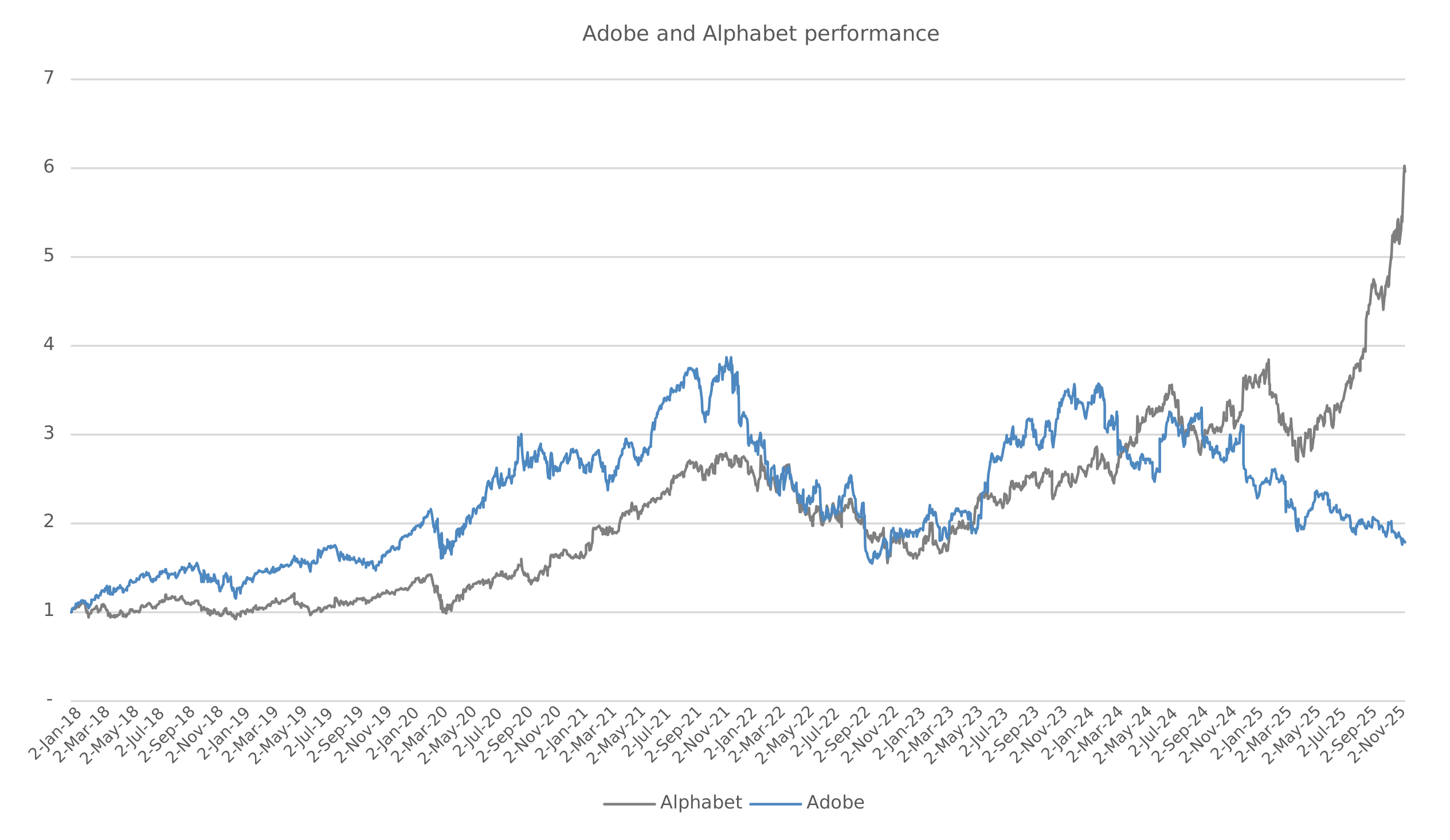
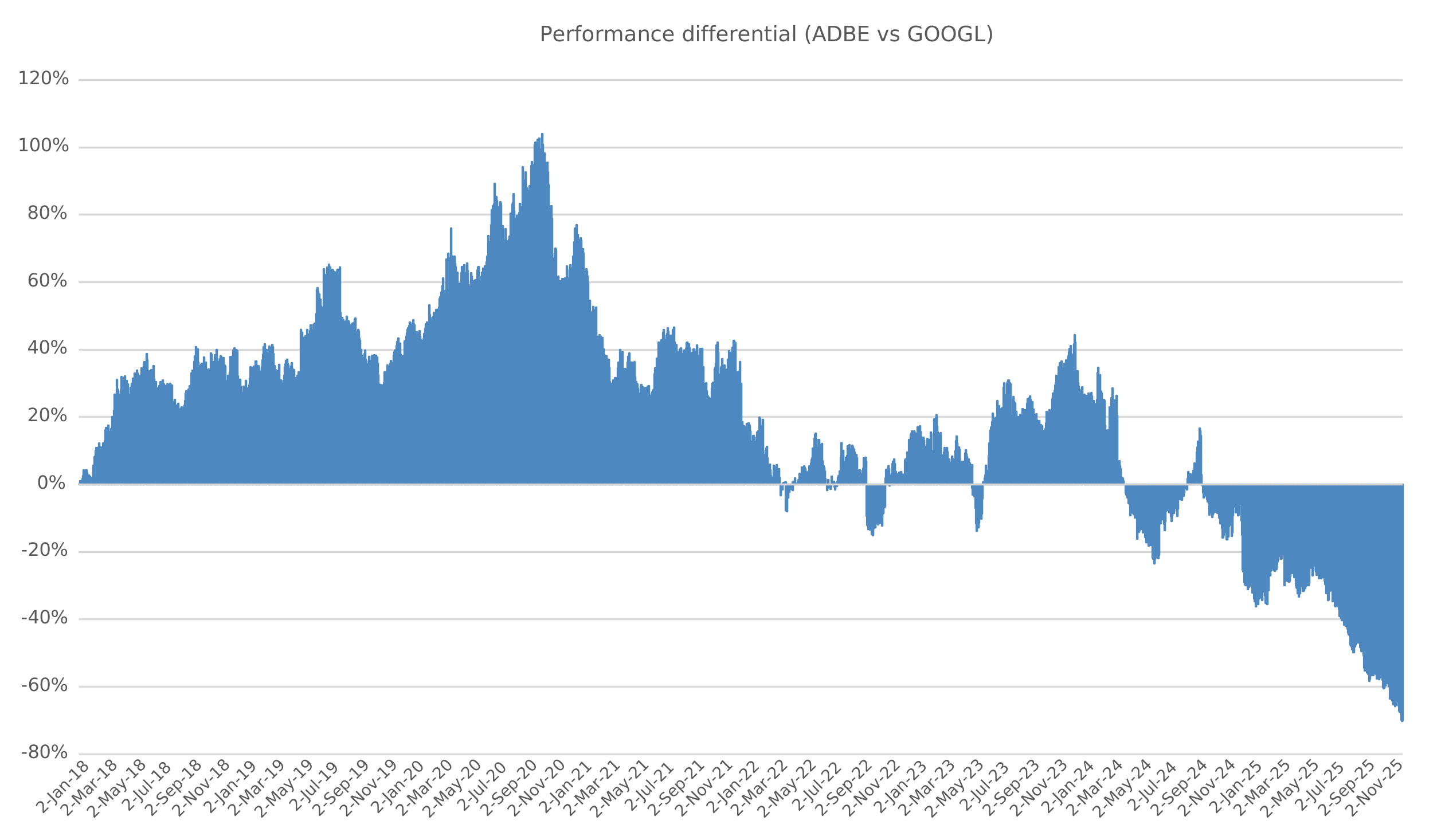
Alphabet recorded very strong EPS growth between 2022 and 2024, with earnings accelerating sharply year after year. Adobe, while growing at a slower pace, still delivered consistent double-digit EPS expansion across the same timeframe, demonstrating solid underlying momentum. Importantly, even with this milder earnings trajectory, Adobe largely outperformed Alphabet until the start of 2022, supported by its predictable subscription model, strong margins and low capital intensity.
The turning point came when Alphabet benefited from a judicial ruling that effectively defused the most punitive antitrust scenarios, which the market had already discounted into the stock price. The milder-than-anticipated decision removed a major regulatory overhang and led to a rapid EPS-multiple expansion. This rerating was reinforced by a strong quarterly earnings release at the end of September, which raised expectations for future profitability across advertising, cloud and AI-related services.
Adobe, meanwhile, did not benefit from a similar catalyst. Although the company continued to grow revenue at 11% as of Q3 FY25 (vs Q3 FY24) and maintained a significant EPS progression into 2025, sentiment around the stock softened following the Figma IPO on July 31, 2025. Figma’s successful public listing highlighted the strength of a fast-growing competitor in collaborative design, drawing investor attention and temporarily overshadowing Adobe’s otherwise healthy fundamentals. This contributed to Adobe’s valuation derating, even as operational performance remained robust and consistent.
Looking ahead, the outlook for Adobe appears increasingly constructive. The company reported 11% revenue growth and 14% Non-GAAP EPS growth in Q3 FY25 vs Q3 FY24, supported by strong momentum across its recurring-revenue model and a Non-GAAP Q4 FY25 EPS midpoint target of $5.375. With the uncertainty surrounding Figma now behind, much of the derating pressure has already been absorbed. This creates the conditions for a potential normalization of Adobe’s PE multiple, particularly as investors shift their attention back to core fundamentals, consistent earnings delivery and the company’s ability to sustain growth into 2026 and beyond.
| Q4 FY25 target | ||||
| Q3 FY25 | Min | Max | Midpoint | |
| Total revenue | 5.99 billion | 6.08 billion | 6.13 billion | 6.10 billion |
| Digital Media | 4.46 billion | 4.53 billion | 4.56 billion | 4.55 billion |
| Digital Experience | 1.48 billion | 1.50 billion | 1.52 billion | 1.51 billion |
| Digital Experience subscription | 1.37 billion | 1.40 billion | 1.41 billion | 1.40 billion |
| GAAP EPS | $4.18 | $4.27 | $4.32 | $4.30 |
| Non-GAAP EPS | $5.31 | $5.35 | $5.40 | $5.38 |
Important Disclaimer
By reading this content, you agree that you are accessing it for educational purposes only and not for investment decision-making. The content published on myEquityResearch.com, including this article, is provided for informational and educational purposes only. It does not constitute equity research, investment advice, a recommendation, or an offer to buy or sell any securities or financial instruments. No investment ideas, opinions, or strategies are expressed or implied. Nothing in this article should be interpreted as a buy, sell, hold, or any other form of investment signal or recommendation regarding Adobe Inc. (ADBE) or any other company. All historical facts, figures, and narratives presented are based on publicly available information and are shared solely to illustrate the historical development of technologies and businesses. Readers are solely responsible for their own investment decisions and should conduct their own due diligence and consult qualified financial professionals before making any investment. Investing involves risk, including the possible and full loss of principal. Past performance is in no way guarantee of future results. myEquityResearch.com and its authors have no business relationship with any company whose stock is discussed in this article.